
By Peter Kahindi

THE NEWLY APPOINTED MINISTERS who are running their tours of duty with the right enthusiasm, zeal and practicality kwa ground are exactly what Uganda has been waiting for.
Kisanja No More Sleep is real, people!
Top in class are the Ministers of Local Government, Works and Transport, and – as before – our Prime Minister.
Seeing Ministers traversing the country and holding public servants and contractors to account in public (no pun) makes some of us want to hold parties every day.
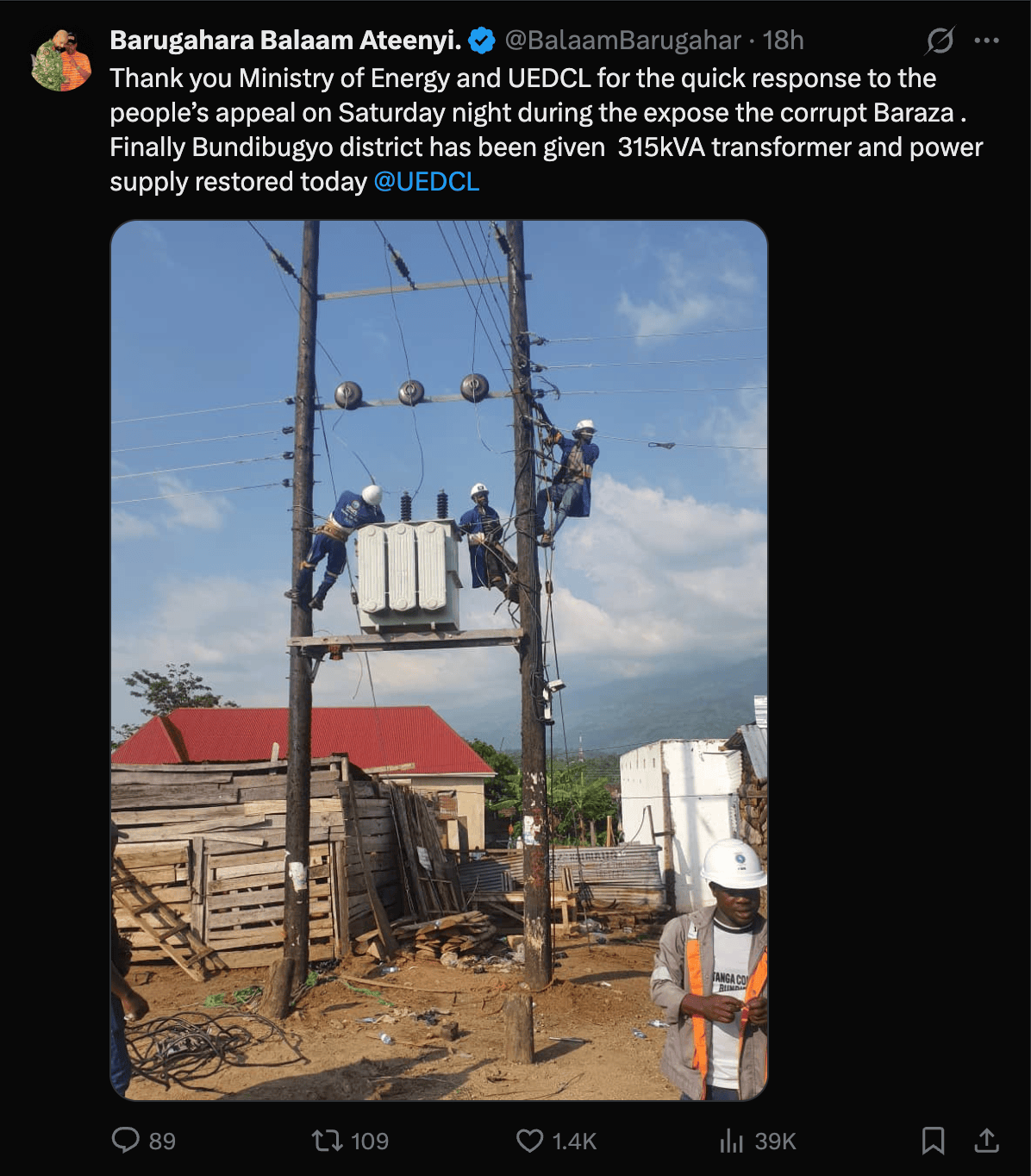
We have shared our views before, on this same platform, regarding the pros and cons of the approach taken up by some of our leaders.
Another approach we are welcoming with glee is the issuance of Ministerial Orders.
The Directive on Local Government Transparency, Public Accountability, Community Productivity and Regulation of Alcohol and Betting Operations is our focus today.
Directive 5 ordered that all bars and malwa (local brews) joints should open only after 3pm while Directive 6 cautioned that there shall be enforcement in the event of defiance of Directive 5.
We are committed proponents of the regulation of the alcohol industry in general – and illicit alcohol in specific – and have pronounced ourselves on this before.
Directives and Orders which are issued without bearing in mind certain regulatory concerns may have implementation challenges because of the possibility of regulatory contradictions.
Before we go into the legal and regulatory concerns, there is the issue of the nature of the wording of Directive 5. For instance, there is a reference to “alcohol-selling establishments.”
Are supermarkets and shops which also sell alcohol affected? How about restaurants which also sell alcohol? Is the Order about selling alcohol or its consumption?
Then there is the issue of time.
Establishments are directed to start selling alcohol after 3:00pm – but it is not clear when they should stop.
The lack of clarity here opens the door for controversies and abuse.
Back to the regulation itself.
Directives 5 and 6 subject the Minister’s Orders to existing laws.
We can do away with the colonial and archaic Liquor Act of 1960 which was repealed under the first Schedule of the Law Revision (Miscellaneous Amendments) Act, 2023.
The Portable Spirits Act is also not helpful.
Whereas the standards to be followed in the manufacture of alcohol are set and enforced by the Uganda National Bureau of Standards (UNBS), we do not have a specific law that addresses the distribution, selling and consumption of alcohol.
The famous Alcoholic Drinks Control Bill, 2023 is still gathering some dust, having been opposed by some key stakeholders because the consensus is that regulation should be reserved for the illicit alcohol producers.
This leaves us with the licensing regime under the Trade (Licensing) Act Cap 101 (As Amended).
This Act is administered by the Ministry of Trade, Industry and Cooperatives and not the Ministry of Local Government. However, Trading License Certificates are obtained from Local Government offices under the Ministry of Local Government.
Interesting, right?
Assuming that we take a bar as an example, the business will typically be expected to register with Uganda Registration Services Bureau (URSB), obtain a Tax Identification Number from Uganda Revenue Authority (URA) and proceed to apply for, and obtain a Trade License Certificate for the respective town, municipal or city council.
These Certificates do NOT have restrictions on the hours of working as conditions of their validity.
As long as one has paid for the appropriate class, one is issued with a License.
Assuming that these are the licensing requirements and lawful local government regulations that the Minister’s Directives are subject to, the said Directives can be rendered unenforceable in the presence of a valid Trade License Certificate issued under an Act of Parliament.
The appropriate regulatory mechanism to adopt is for the Honourable Minister of Local Government to work with the sister Ministry of Trade Industry & Cooperatives in order to come up with a Statutory Instrument that speaks to the Orders that he seeks to have implemented.
This has been done before and effectively so.
For instance, the line Minister previously amended the fees payable under different classifications of licence holders under the Trade (Licensing) (Amendment of Schedule) Instrument, 2011.
Similarly, if any specific or general restriction is to be attached to the Trade License Certificate of any alcohol-selling establishment, a Statutory Instrument under the Act is required.
On to the Order Issued on Betting Operations.
Directive 7 guides that local governments should regulate the operating hours of betting companies within their jurisdiction, subject to applicable laws and regulations.
Betting companies have a national regulator in place.
The Lotteries and Gaming Act of 2016 provides that the National Lotteries and Gaming Regulatory Board is charged with the statutory responsibility to regulate and supervise the establishment, management and operation of lotteries, gaming, betting and casinos in Uganda.
It is our considered opinion that the operating hours of betting companies and the protection of citizens from the adverse effects of betting are included in the above function.
It suffices that in the presence of the current regulatory mechanisms, local councils do not have the mandate to regulate betting companies.
The local government may, however, explore the option of undertaking an Understanding with the regulator at the top Policy making level to enable the realization of what the Honourable Minister seeks to accomplish regarding limiting access to betting houses.
The Orders or Directives issued by the Minister of Local Government are in good faith.
However, regulatory consistency is needed in order to avoid the likely possibilities of abuse or outright defiance.
As seen above, there are regulatory overlaps and complexities that need to be dealt with in order to come up with binding Laws to which the relevant stakeholders have worked in tandem to accomplish.
An Order or Directive issued by one of the stakeholder through a Ministerial Circular may be found wanting in this regard, and lead to more noise than actual results.
In this case, the Ministers’ barks at the problems in society will certainly be much worse than the bites we so urgently need them to take.


Jambo (Hi)! I’d be happy to hear your thoughts so…say something here?