
By Peter Kahindi

Over one of the weekends earlier this year, I happened to be in Kabwohe, and took time to watch TV West.
The advertisements, an overwhelming number for the ordinary viewer returning from Kampala, were mostly suggesting alcohol brands that I had never seen or heard of before – even at my big age.
I can’t even pretend to recall them all.
I discovered ‘Kumbucha’, ‘Kituzi’, ‘Buhweju’, ‘Officer’, ‘X-5 Gin’, ‘Diplomat’ and ‘Sabula’.
When airing those advertisements, the letters “UNBS” are displayed with prominence to assure viewers that the product is certified by the Uganda National Bureau of Standards (UNBS).
That notice is for you people with a lot of English and lugezigezi.
I presume the actual consumers of those products wouldn’t care much about this UNBS detail.
Yet, like we always say, the government owes its citizens a duty to protect them, even against themselves.
This puts alcohol – especially illicit alcohol – dead centre in target.
Illicit alcohol is a slow killer and is doing its job impressively.
The extent of illicit alcohol consumption in Uganda is well documented.
Just last year, the Observer cited an extensive study by Euromonitor International, stating that illicit alcohol consumption accounts for 65% of the overall alcohol intake in Uganda.
The Association Against Illicit Alcohol Uganda (yes, it is that serious) said the same, reported by Capital FM, adding that illicit alcohol often contains toxic methanol – which is poisoning.
The government collects up to UGX 1 Trillion in taxes from legally produced alcohol.
Mathematically, we lose upwards of UGX 3 Trillion in tax revenue by allowing the distribution of illicit alcohol.
Our bigger concern, though, is the health hazards of this illicit alcohol to Ugandans.
Standards exist to save us from such health hazards.
It all seems fun until you learn that the illicit alcohol has extreme effects.
For instance, in 2014, five people were reported to have died from consumption of illicit alcohol in Nansana. More than 50 people have reportedly died in neighbouring Kenya under similar circumstances.
In 2022, the lethal ‘X 5 Gin’ was reported by Police to have killed 12 people and injured another 20. This drink was produced, distributed and consumed without any certification or license.
Illicit alcohol is both easily accessible and affordable.
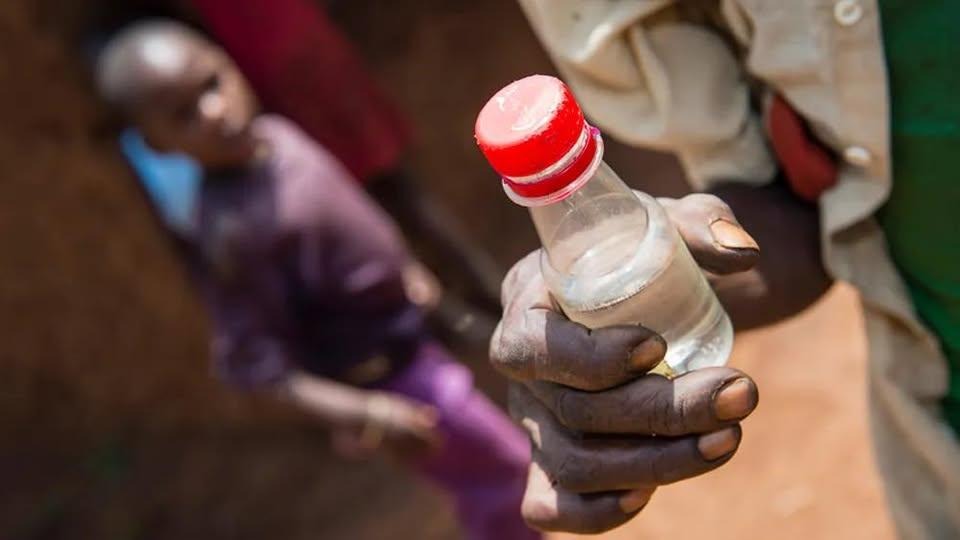
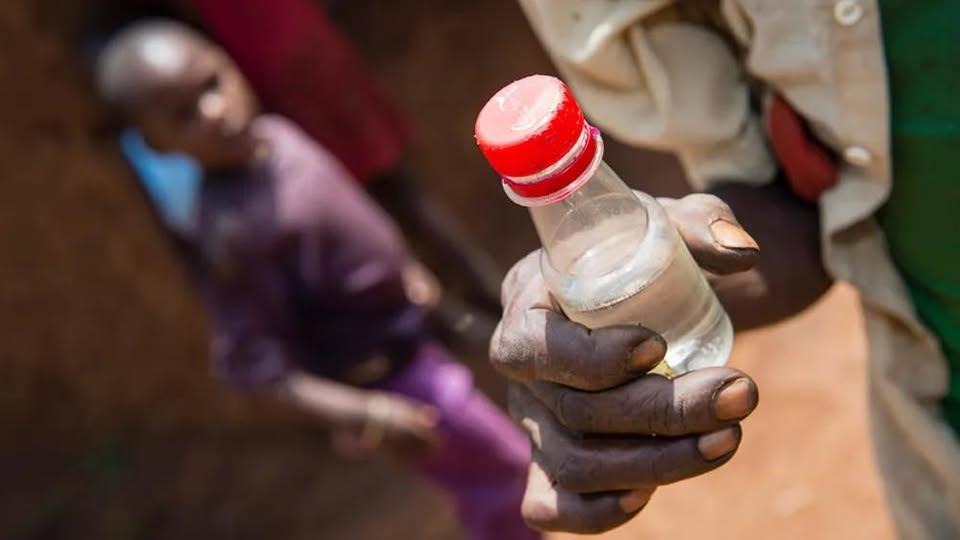
For as little as UGX500 you can get a plastic bottle of some unregulated drink “manufactured” from God-knows-where.
These bottles offer scanty information about their contents or manufacturer.
Perhaps, due to easy accessibility and almost non-existent enforcement, the intake is on the increase, with Uganda’s youthful population hooked.
These things are worse than a serious health hazard; they form an existential challenge considering the majority of our population consists of those very youth who are most susceptible.
When things get so far out of hand this way, the State should do more – and more firmly.
Our South Western neighbors recently closed 101 alcohol producing and distributing facilities and banned the importation of questionable drinks.
This level of seriousness is urgently required.
The production and distribution of illicit alcohol should be treated as the national emergency that it quite simply is.
In the words of Dr. Ruhakana Rugunda, “Regulation (of illicit alcohol) is not a matter of choice but of necessity.Without stronger laws and enforcement, Uganda risks losing a generation of its most productive citizens to addiction, accidents, and preventable deaths. The government and civil society must walk hand in hand to protect our people.”
The efforts so far to combat the situation are insufficient.
The government came up with the National Alcohol Control Policy, but it has shortcomings.
It does not really address illicit alcohol production, distribution and consumption, and even its recommendation on the formation of a Committee to oversee its implementation did not take off.
Even when the matter was brought before the Parliament, it was not given much attention.
A new and relevant regulatory regime is urgently required. It should cover production standards and licensing, distribution and traceability, taxation and economic incentives for formalization and strong sanctions for non-compliance.
Uganda needs a regulatory atmosphere that caters to the economic benefits of engaging in this trade while protecting the lives of consumers.
Once we have that in place we can raise a toast – using sensible, and appropriate legal drinks.



Jambo (Hi)! I'd be happy to hear your thoughts so…say something here?