
By Peter Kahindi

The week opened with tradition, pomp and circumstance.
A New King for Tooro
Tooro’s new king, Omukama Edward Kijanangoma Rukidi Nyabongo I, was installed at Karuziika Palace after an overnight procession, where he and thousands of his subjects walked about three kilometres through the city.
His installation followed a difficult month.
Omukama Oyo, who led the kingdom for 31 years, died on August 27th and was buried on September 12th. A Babiito succession committee selected Nyabongo on September 9th, and the Tooro Supreme Council then endorsed the decision.
Hangiriza Agutamba!
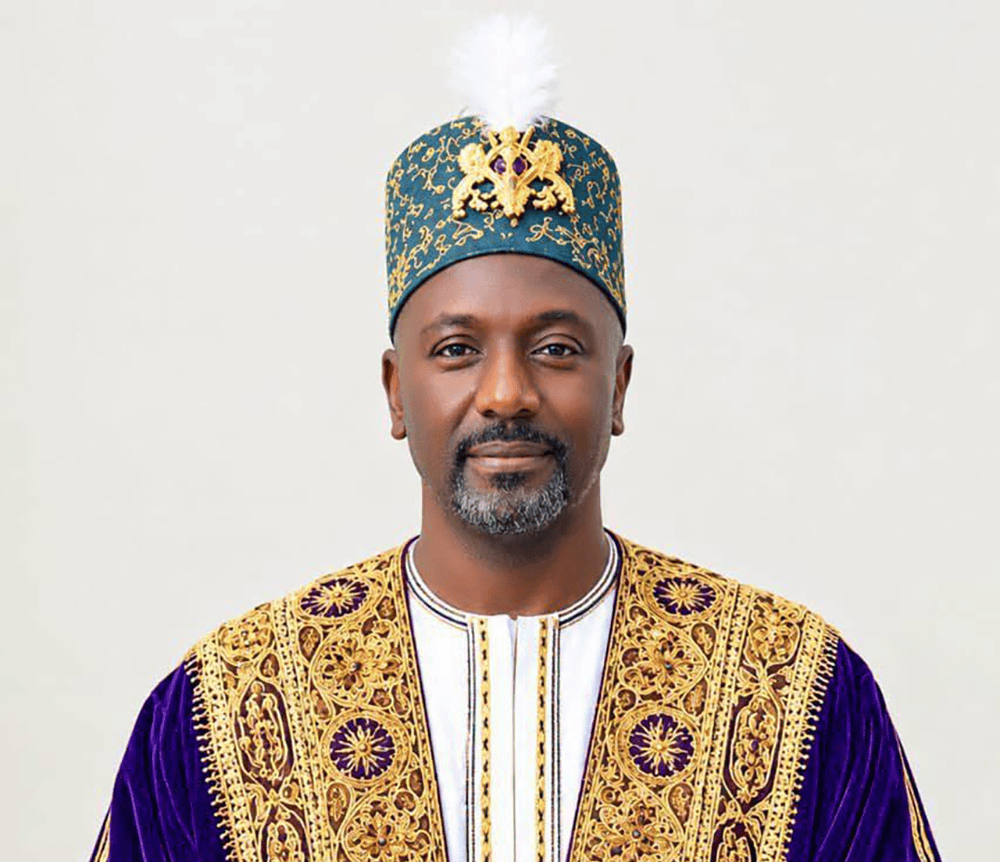
Grief, selection, burial and installation all happened within about a month.
To the uninitiated, but especially those who don’t read about well-documented stuff, this was a “rushed process.”
However, just over thirty years ago, the period between the death of King Oyo’s father and the coronation took all of 17 days.
As with any succession, there was some pushback, much of it online and mostly inconsequential. That is normal in a healthy, open society, and the debate did not derail the process.
The Babiito clan and kingdom institutions, following their own procedures, completed the transition calmly and on schedule.
That reflects progress, because the institutions worked. It reflects pragmatism, because the kingdom chose continuity over prolonged uncertainty. And it reflects the resilience of a community that mourned a young, well-loved king and still turned up in the thousands to welcome his successor.
The Business Case for Culture
There is also a business case here.
The ceremony was pure cultural theatre: a mock battle at the palace’s main entrance, and the royal drums, including the main royal drum Butwarane, sounded nine times.
Ugandans and tourists thronged Tooro in their thousands, and the region’s hotels, transporters, food vendors and craft-makers felt the benefit.
Tooro already has the natural attractions to build on; Omukama Oyo spent a lot of energy promoting the Rwenzori Mountains, Kibale National Park and the Sempaya Hot Springs. Pair those with the palace, the royal tombs and the coronation anniversary celebrations, and Fort Portal can offer a “culture plus nature” package that few destinations can match.
A Win on the Pitch
We enjoyed another win – in the same neighbourhood asTooro. This one was on the pitch and in the stands of our prestigious Hoima City Stadium.
It deserves to be told with equal energy.
Visitors from the football family flew and drove in, and by most accounts they left as ambassadors.
Their praise, much of it carried by FUFA TV on social media, kept returning to the same themes: the warmth of ordinary Ugandans, a sense of peace and security, and the depth of young talent in the country.
Ugandans on social media received it warmly, and it is worth pausing on why it landed.
Visitors are rarely impressed by brochures. They are impressed by the taxi driver who gives directions with a smile, the hotel staff who go the extra mile and the crowds that welcome a rival team with curiosity instead of hostility.
That kind of hospitality cannot be manufactured, and it is the most credible marketing a country can have.
Hoima City Stadium Makes History

Nowhere was it more visible than at Hoima City Stadium.
On Tuesday evening, the stadium hosted its first international match, and it was a historic one.
To add icing to the cake, the Uganda Cranes beat Libya 1-0 in a 2027 AFCON qualifier, the first international fixture at the new stadium.
The occasion also carried extra significance for football in Uganda. It was the first competitive international involving the Cranes outside the Kampala metropolitan area, apart from CECAFA competitions.
For decades, big national team nights have been synonymous with Namboole. Hoima has now proved that the Pearl’s football story extends well beyond the capital.
The stadium is a success worth celebrating. The 20,000-seater multi-purpose venue was built by SUMMA and is one of the venues selected for AFCON 2027. It sits in a city that has been steadily preparing for the moment.
Months ago, inspection teams were already touring Bunyoro hotels to identify accommodation for visiting teams, and local hoteliers spoke of a chance to put Hoima on the map. Their optimism now looks well placed, because a stadium that fills, a crowd that sings and a city that hosts two national teams without incident is exactly the proof that co-hosting AFCON needs.
Security is part of this story too. Police and UPDF personnel secured the stadium and access routes, and the deployment was meant to protect teams, fans and the public.
The result was a calm, festive evening, and that calm is what visitors mean when they talk about peace and security. Good organisation rarely makes headlines, but it is what makes a tournament work.
Then there is the talent. Whether in the Cranes’ mix of home-grown players and new faces, or in the young players visitors noticed across the week’s football activities, the message was consistent. Uganda has no shortage of ability.
What it needs is stages, and Hoima has just added a fine one.
A Third Win From the Sky
A third win came from the sky.

On Sunday, Kabalega International Airport in Hoima, which some might still know as Kabaale International Airport, registered its first commercial landings.
An Eagle Air Uganda flight carrying officials from the Confederation of African Football and the local organising committee touched down in the morning.
We applauded.
Later on the same day we roared when another flight landed – a Uganda Airlines flight carrying the visiting Libyan team, who were received by Works and Transport Minister Fred Byamukama.
The Cranes themselves also arrived by the Uganda Airlines flying crane.
This is a milestone that has been a long time coming.
Construction began in April 2018, and the airport was originally conceived to serve the oil industry. Seeing it receive passenger aircraft marks its transition into a gateway for Hoima, Bunyoro and the wider Albertine region.
The official commissioning is now set for January 2027, so these flights are a demonstration of readiness rather than the final opening. But they are a powerful one, arriving just ahead of AFCON 2027, which Uganda will co-host with Kenya and Tanzania.
A second international airport, 200 kilometres or so from Entebbe, takes pressure off the road for teams, officials and fans heading west, and gives the region’s hotels, transporters and traders a new reason to be optimistic.
None of this means the challenges have vanished. Infrastructure, governance, transport and hospitality standards will need to keep improving in every host city. Honest criticism is part of how a country gets better, and it should continue.
Tooro and Bunyoro: One Itinerary
The links between the Tooro and Bunyoro regions make this an even stronger story.
I stand corrected if I am mistaken, but I recall that Tooro was founded in the 1830s by a son of the king of Bunyoro, so the week’s two headline events, one in Fort Portal and one in Hoima, are part of a shared western Uganda heritage.
Imagine a circuit that takes a visitor from a Cranes match in Hoima to the palace in Fort Portal and on to the chimpanzees of Kibale! With AFCON 2027 approaching, that is a ready-made itinerary for the thousands of fans and journalists who will be looking for more than football. Can we dare to dream?
Holding Two Ideas at Once
A nation can hold two ideas at once. We can address our shortcomings while also recognizing, loudly and proudly, what is working.
Positive stories are not propaganda when they are true, and this week they were true. Foreign guests saw a welcoming people, a safe country and a football culture with real depth. A packed Hoima City Stadium told the same story better than any campaign could.
The task now is to build on it. Keep the stadium busy, keep the standards high and keep telling the stories of what goes right. The world has noticed Uganda this week, and we should give it plenty more to notice.




Jambo (Hi)! I’d be happy to hear your thoughts so…say something here?