
By Peter Kahindi

THE VIDEO clips we have seen of our Local Government Ministers, Hon. Balaam Barugahara and Hon. Justine Nameere, are NOT the ones we expected.
I do not need to take a poll – you are all guilty of having expected a very different set of videos and photos emerging from the Ministry of Local Government from the day after those two swore into office.
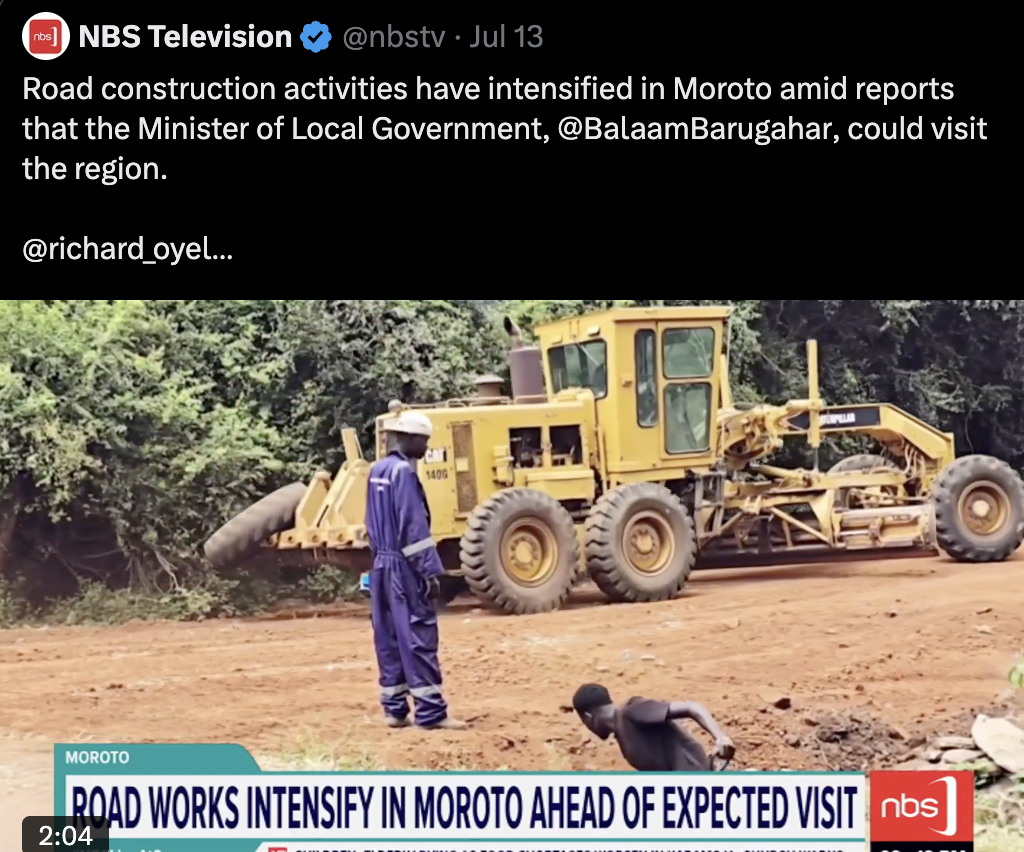
Instead, we have been treated to simple but amazing news clips of the ministers going round different districts doing spot checks on service delivery.
One morning they conduct an inspection of the state of roads in one area, then in the afternoon one of them checks on the state of a pit latrine at a government hospital; and the next morning, one holds a random roll call at a public school to establish public servant absenteeism from duty.
The said Ministers ensure that what they do is recorded and well-circulated on different social media platforms.
In some cases, public servants whose work ethic, accountability, and dedication have been literally found wanting have been suspended from duty – right there live on smartphone video.
This practical approach by the two Ministers to a well-known problem is much needed and appreciated.
We even hope they invite other Ministers to follow suit.
While I agree that people in leadership positions should take lead in the fight against corruption, I disagree with the Ministers’ approach, for three reasons:
First, this approach is an affront to the fundamental rights of those that the Ministers have found to be culpable.
A public servant who is being subjected to questioning about the utilization of public resources ought, at least, be given an opportunity to defend themselves or present their side of the story.
It is a simple case of giving someone a fair hearing.
In what we have observed, there is usually no time or not enough time for those singled out by the Ministers to present their versions.
Denying people a chance to prepare and present their side presents the likely situation that either a wrong person is being punished or the person is being punished for something that was beyond their control.
Both scenarios are practically possible.
Second, the style of the visits by the Ministers may end up being self-defeating in the sense that, if there is no elaborate process undertaken to build strong cases against the suspects, then the likely event is that they will walk scot-free.
This is because in most cases, procurements and projects are handled in such a way that bases are covered – at least within the provisions of the contract and the attendant guidelines.
For an accusation so grave that someone is forced to abandon a permanent and pensionable job, a serious case must be built and prosecuted.
Third, surprise raids on these institutions present temporary online excitement with some unease felt by those whom the Ministers may choose to pounce on next.
But it may not address the core problems.
In our estimation, there is a need for a grand system overhaul, and that is much much bigger than the Ministers’ publicly-covered and well-lauded campaign against corruption and inefficiency.
Suspending individual officials as a correction method to corruption is made difficult by the complex web of government procurement.
The system involves contract award mandates, contract management protocols, contract execution oversight, monitoring and evaluation processes and responsible accountability of funds.
If their firing is successful, the individuals who get fired on video are easily replaced by others who will find a system in place that they will have to work within to…do the same as before.
Local government procurement and contract management procedures are still mainly manual, governed by the Local Government (Public Procurement and Disposal of Public Assets) Guidelines.
It is more than likely that this system provides more opportunities for graft than the system checks they were intended to provide.
As suggested by my young brother Wes Kambale, “build systems that leave footprints, digitize everyday processes, make every shilling traceable, audit automatically instead of occasionally, (and) make it harder to steal than it is to do the job properly.”
The Ministers would be well advised to instead invest their time and resources in a deep dive and comprehensive analysis of the entire system; understanding what its failures and shortcomings are; getting to know the offices that enable the deliberate contract frustrations; and working out how they are able to accomplish their plans systematically and without detection.
The next steps would be to design, review and roll out a modern-facing system that should make things really difficult for projects to be derailed or affected by intending corrupt officials.
In their roles as the top political heads of the Local Government Ministry, this is something that is within their power and control to do.
That is how impact is created, consistent with the Kisanja No More Sleep agenda.
The country is not short of the experts and analysts to address this situation.
Even I can recommend a few.
Otherwise, the current strategy will only create a buzz for a moment and then things will continue as usual.
Kisanja No More Sleep will require all of us to think about how to rid the country of corruption and implement them in ways that matter for longer than any video clip out there.


Jambo (Hi)! I’d be happy to hear your thoughts so…say something here?