

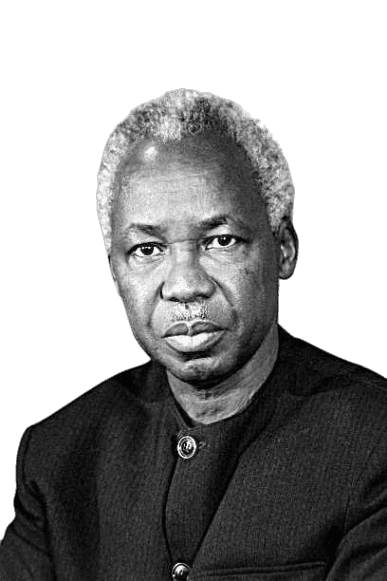
I WAS privileged this year to celebrate Julius Nyerere Day in Dar es Salaam, filling my mind with thoughts about that great African.
A Nation, Not a Tribe
My colleague, Salum Nassor, told me how he realised as a child that Nyerere was such a great, visionary African because of the way he diluted the importance of tribe over nation.
Salum came from Karagwe in the north of the country but, as Nyerere’s policy had it, he had to attend school in Tabora, in central Tanzania – crossing hundreds of kilometres to do so.
That was the practice those days – including the deployment of public servants like teachers, medical professionals and so on and so forth.
There, Salum found that the children were so varied in tribe they all had to focus on one central language – Kiswahili – and centralise on the one identity they could share – their nation.
Mwalimu Julius Kambarage Nyerere did that.
Ujamaa: Familyhood
He also championed Ujamaa – familyhood, not just brotherhood.
Ujamaa focused on social equality, community living and economic self-reliance working with our fellow Africans.
As Ugandan children in the 1980s we shared tales of marvel about Tanzania and this great man, some of which were quite mythical.
One of them went: “In Tanzania you drive a car and when you park it you are supposed to leave the keys inside and just go, so that anyone else who needs it can also drive it to their destination when ready.”
We were socialist at heart because we were Africans, and it is almost our nature: Ubuntu.
Mwalimu understood that and built up an ideology based on who we are, what we need, and what can work for us as Africans.
What We Must Teach Our Children
We must teach our children and grandchildren about great men like Mwalimu Julius Kambarage Nyerere.
We must dilute the lessons they are still getting in school about characters from Europe being significant yet they were debilitating to Africanness, in general. Our education curriculum, from my light spot-checks as recently as last month, still focuses on the wrong people.
Also urgently today, we must devalue the glamour and shine that some social media forms present that makes our people feel less African than Nyerere and his peers dreamed of for us and our greatness.
Fifty Years Ahead of His Time
Nyerere’s reach went far beyond Tanzania and East Africa. He was the strong man – morally, ideologically, militarily and financially – for the anti-colonial, anti-apartheid, anti-racist and pan-African movements across this continent.
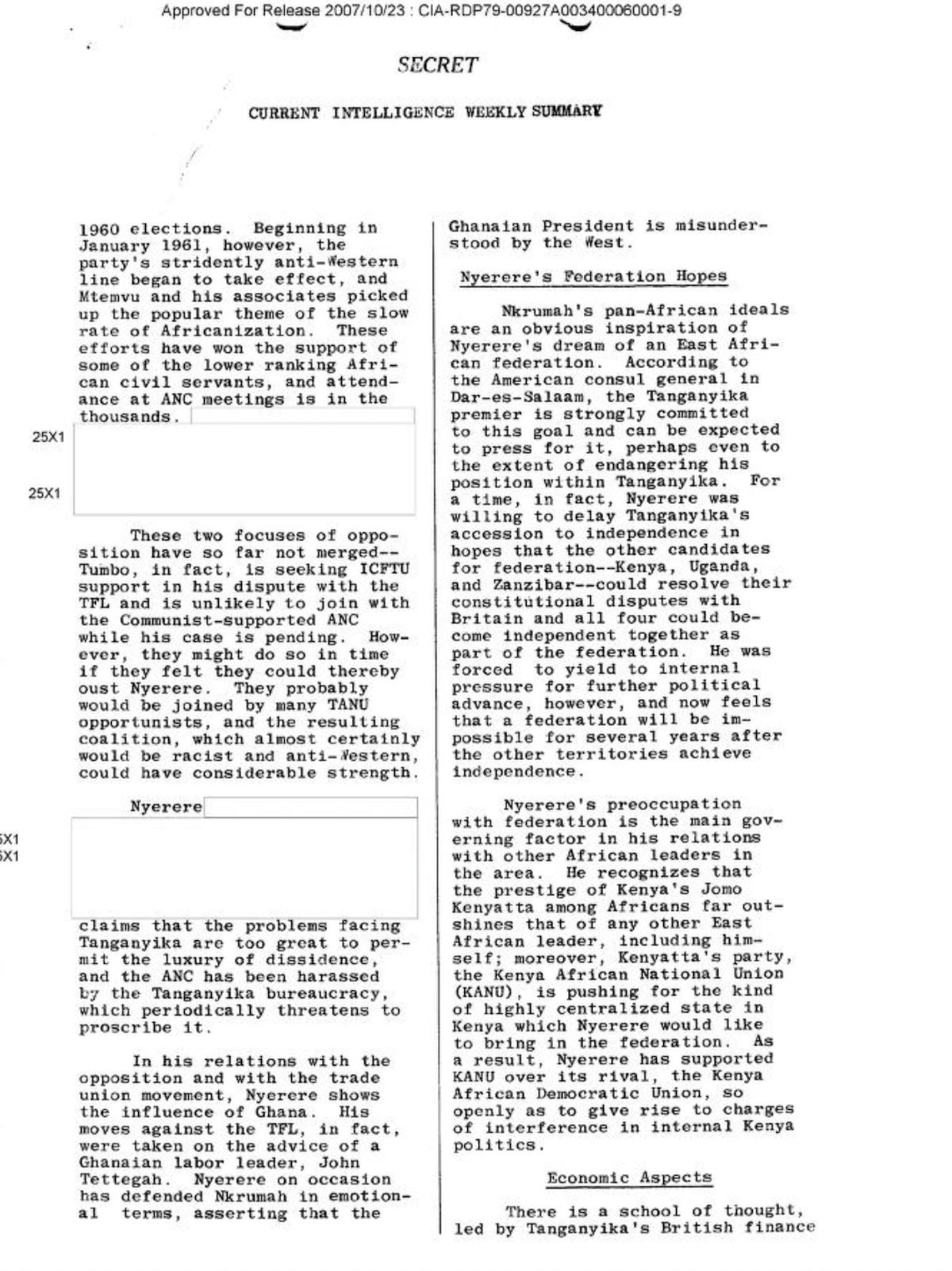
I devoted my Julius Nyerere Day to reading more about him, and found a CIA (the US Central Intelligence Agency) Intelligence report from November 1961 that said a lot about him that made sense and I respected.
The CIA had already identified that Nyerere “can be expected to pursue a moderate neutralist line in foreign relations and to push for a regional grouping in East Africa.”
Instead of falling East or West in global alliances, he focused on AFRICA and his corner here East of the Continent.
Tanganyika hopes to follow a policy of ‘independence’ on East-West issues. Despite his admiration for Nkrumah, Nyerere’s idealism is likely to draw him more toward Nehru and other moderate neutralists who are trying to bridge the gap between the two major blocs.
He has a realistic idea of the likely extent of Tanganyika’s influence in these areas, however, and is likely to devote most of his attention TO MATTERS CLOSER TO HOME.
One British official described Nyerere as ‘fifty years ahead’ of any other Tanganyika African.
Nkrumah’s pan-African ideals are an obvious inspiration of Nyerere’s dream of an East African federation. According to the American consul general in Dar-es-Salaam, the Tanganyika premier is strongly committed to this goal and can be expected to press for it, perhaps even to the extent of endangering his position within Tanganyika.
For a time, in fact, Nyerere was willing to delay Tanganyika’s accession to independence in hopes that the other candidates for federation – Kenya, Uganda, and Zanzibar – could resolve their constitutional disputes with Britain and all four could become independent together as part of the federation.




What a great man! What a loss we continue to suffer, simply because we did not live or follow his dream even back then.
Indeed, he was fifty years ahead of his time and more!
What a great man, even though he admirably would have rejected the accolade!
What a great African!
Long Live Mwalimu Julius Kambarage Nyerere! Long Live Africa!


Jambo (Hi)! I’d be happy to hear your thoughts so…say something here?